Knowledge Base Article
How to Track Contracts and Amendments
Contracts hold your agreements with vendors, clients, and partners, and each contract keeps its own amendment history so you can see how the deal changed over time.
Go to Marketing & Engagement > Contracts.
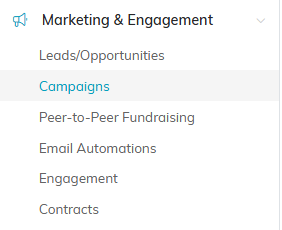
Contracts sits at the bottom of the Marketing & Engagement menu.
Adding a Contract
- Click Add A New Contract. Argenta asks for the Contract Title and the Constituent, both required. You can also choose the Contract Type and the Contract Start Date here. The start date begins on today's date, and one left blank is saved as today.
- Click Add & Enter Details. The contract is created and the Contract Workspace opens.
- Fill in Contract Details. Two fields are required: Contract Title and Constituent, the party the contract is with.
- Save.

Add A New Contract opens a short form. Contract Title and Constituent are required; Contract Type and Contract Start Date are optional.

Contract Title and Constituent both carry the orange asterisk.
Contract Details
- Contract Title (required) and Constituent (required)
- Current Status - where the agreement stands
- Contract Start Date and Contract End Date
- Contract Value - what it is worth
- Contract Type and Contract Category - your own classification lists
- Version Number - which version of the agreement this record reflects, as a number such as 1 or 2.5
- Team Member - who owns the relationship on your side
- Description

Status and the four dates sit at the top of the form.
The Contract End Date, Review Date and Term/Completion Date are all measured against the Contract Start Date. Set any of them earlier than the start date and the contract will not save, and Argenta names the date to fix. A date you have not filled in yet is never checked, so it cannot block a save.

Type and Category come from your own classification lists.
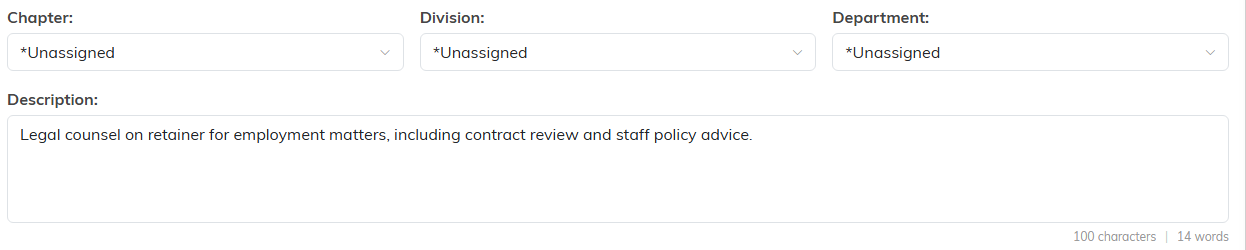
Description is where you say what the agreement covers.
Amendments Are Their Own Records
When an agreement changes, do not overwrite the contract or bury the change in a note. The workspace has an Amendments page, and each amendment is a full record with its own Amendment Details, Related Files, and Amendment Notes.
That way the original terms stay intact and the change is documented beside them, which is what you need when someone asks a year later what was actually agreed and when.
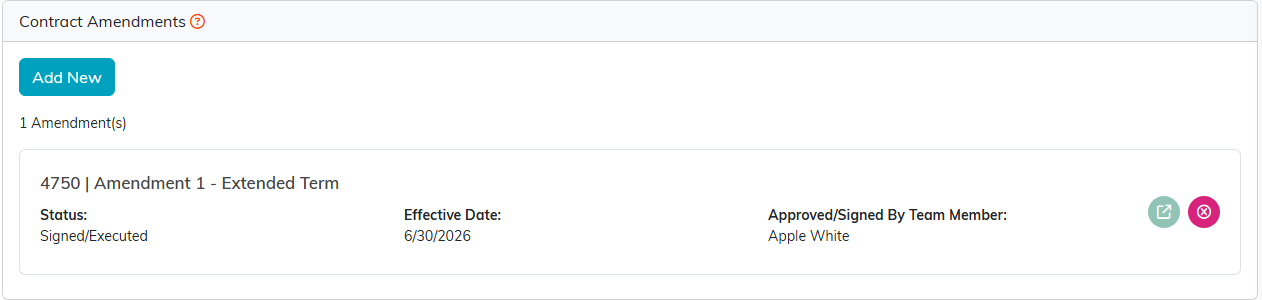
Each amendment is listed on its own, with its status and effective date.
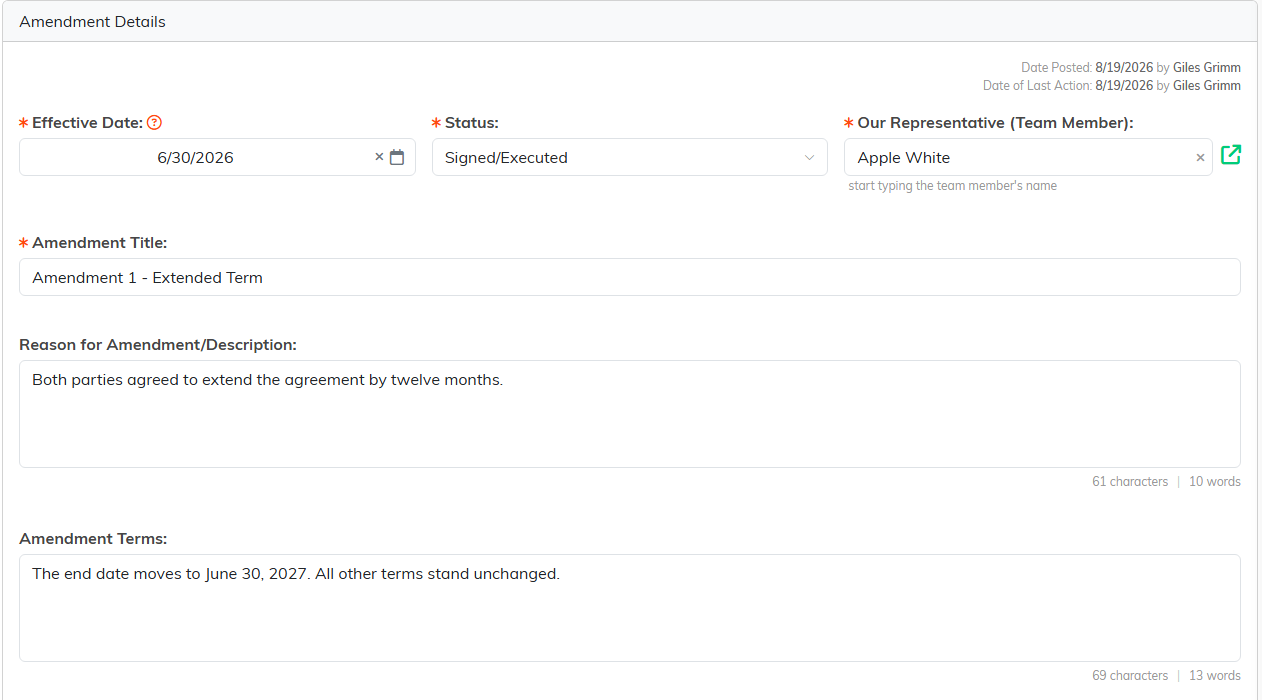
An amendment is a full record, with its own files and notes pages.
Renewals
Contract End Date is the field renewals hang off. Use the Notifications page in the workspace to get told before a contract lapses, rather than relying on someone remembering.

Contract End Date is the field a renewal hangs off.
The Contract Workspace
- Contract Details - the agreement itself
- Amendments - every change, each its own record
- Notifications - alerts on this contract
- Contract Files - the signed PDF and anything supporting it
- Contract Notes - internal notes
- Record Permissions - who can view or edit it

Every page of the contract is on this bar.
Finding Contracts
Search by ID or contract name, and export the list to CSV.

Search by ID or contract name, or send the list out to CSV.