Volunteers
What Your Volunteer Hours Are Worth, and Where You Can Actually Use the Number
The short answer: A volunteer hour is currently valued at $36.14, a figure Independent Sector and the Do Good Institute released on April 21, 2026 from 2025 wage data. You can use that number to recognize volunteers, to tell your program story, and in the narrative section of your Form 990. You cannot report it as revenue on the 990, as public support on Schedule A, or as a non-cash contribution on Schedule M, and it does not belong in your financial statements unless the work required a professional skill or built something. For a federal grant match the rules are different again, and $36.14 is usually the wrong rate to use.
Somewhere in the annual report you are drafting right now there is a sentence like this one: "Our 214 volunteers gave 5,100 hours last year, worth more than $184,000 to the community."
It is a good sentence. It is also the sentence that gets a development director and a finance director into an argument every fall, because one of them has just read it in the draft and knows it cannot appear anywhere near the audited statements, and the other one cannot see why a real number describing real work is suddenly forbidden.
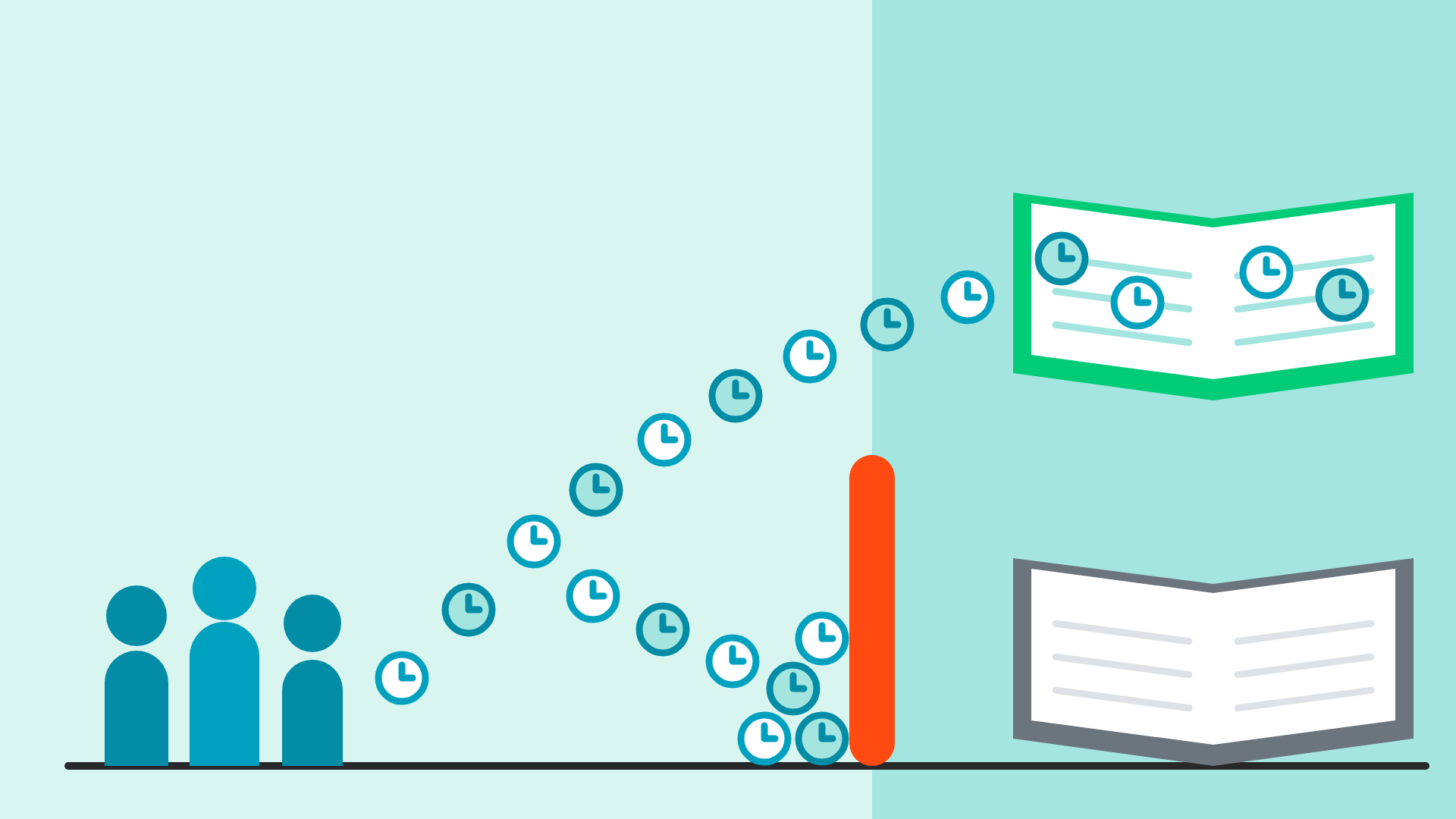
They are both right. The number is real and the number is off limits, and which one applies depends entirely on which document you are writing. Here is the whole map.
Where $36.14 comes from
Independent Sector, working with the Do Good Institute at the University of Maryland, publishes an estimated value of a volunteer hour every year. The current figure is $36.14 per hour, released on April 21, 2026 and estimated from 2025, the last full year of data available. That is a 3.9 percent rise on the year before.
The methodology matters more than the headline. The estimate is built on the average hourly earnings of production and non-supervisory workers on private non-farm payrolls, from the Bureau of Labor Statistics. It is an average of ordinary wages. It is not a valuation of your particular volunteers doing your particular work, and Independent Sector's own president says plainly that it is impossible to capture the contribution of the volunteer force in a dollar amount.
State-level figures are published as well, and they vary widely. If your volunteers are all in one state, the state number describes them better than the national one does.
The three places the number is legitimate
1. Recognition, and telling people what happened
This is what the figure was built for. Charitable organizations most frequently use it to show the scale of community support behind the work. An annual report, a board packet, a volunteer appreciation night, a slide for a civic club: all fine, all normal, and no accountant will object as long as the number stays out of the financial statements sitting behind it.
One habit is worth keeping. Say what the number is when you use it. "Our volunteers gave 5,100 hours, which at the national estimated value of volunteer time is about $184,000 of community contribution" is honest and unarguable. "Volunteers contributed $184,000" reads like income, and somebody will eventually ask where it went.
2. Cost share or match on a federal grant, at a different rate
This is the one most often gotten wrong, and it is the one with money attached.
Under the federal uniform grant rules, volunteer services can count toward a cost sharing or matching requirement. 2 CFR 200.306 says that volunteer services furnished by third-party professional and technical personnel, consultants, and other labor may be counted as cost sharing if the service is necessary for the program.
Then it tells you how to value them, and this is where $36.14 usually stops being the right answer. Rates for third-party volunteer services must be consistent with those paid for similar work by the recipient. Where the required skills are not found in your own workforce, the rate must be consistent with what is paid for similar work in the labor market where you compete for those services. Allowable, allocable and reasonable fringe benefits can be included.
Read that against a real case. A retired accountant volunteers 40 hours closing the books on a federally funded program. Valuing those hours at the national average of an ordinary wage understates your match by a wide margin, and you have quietly given away money you were entitled to count. In the other direction, valuing a volunteer who stuffed envelopes for six hours at a bookkeeper's rate is the kind of thing that surfaces in a single audit.
The rate has to be defensible against what that work actually costs, either inside your organization or in your local market. Write down which of the two tests you used and why, at the time, while you still remember.
3. The narrative part of your Form 990
The IRS is direct about volunteer time. It cannot be reported as contributions on Schedule A, and the answer on the IRS page is exactly that: "No, volunteer time cannot be reported as contributions in line 1 of Parts II or III of Schedule A." The same page says where it can go instead: "It may be described in Form 990, Part III, Statement of Program Service Accomplishments."
So the work is describable, in words, in the part of the return a human being reads. Program service accomplishments is also where you can report activities of real importance that carry small expenses precisely because volunteers did them. A program running on 3,000 volunteer hours and $4,000 of expense looks like nothing in the expense columns and looks like a great deal in Part III. Write it there.
Where the number is not allowed
• Form 990, Part VIII. Volunteer time is not revenue. In-kind contributions of property go on line 1g. Services do not.
• Schedule A public support. Excluded, per the IRS answer above. This one has teeth, because Schedule A is where public charity status is tested.
• Schedule M, non-cash contributions. Property, not services.
• Your financial statements, unless the work meets one of the two accounting criteria below.
None of that is the IRS being difficult. Every one of those places is a place where a number gets added to other numbers, and an estimate built on national average wages does not survive being added to money that actually moved.
The exception that does reach the books
Contributed services are recognized in the financial statements under ASC 958-605 if they meet either of two criteria: they create or enhance a nonfinancial asset, or they require specialized skills, are provided by people who have those skills, and would typically have to be purchased if they were not donated.
The examples given are professionals and craftsmen: accountants, architects, carpenters, doctors, electricians, lawyers, nurses, plumbers, teachers. An attorney donating 20 hours of legal work you would otherwise have paid for is recognized, at fair value, with an offsetting expense in the right natural category. A contractor donating labor that improves a building is recognized too, because the building is a nonfinancial asset and the work enhanced it.
General volunteer labor meeting neither test is not recognized. That includes a volunteer doing routine repairs, and it includes serving on your board, even though you would have to pay for that work if nobody gave it. The guidance draws the line at whether the information is clearly relevant, clearly measurable, and obtainable at a cost that does not exceed the benefit.
Two practical notes. Recognized contributed services carry disclosure requirements, including the programs the services supported and the extent of what was received and recognized in the period. And the fair value is the value of the service, not the value of the volunteer: a lawyer painting your fence is a person painting a fence.
This is your auditor's call rather than your development team's. Bring them the list before the year closes, not after.
The hours have to be real, or none of this works
Everything above assumes a number you can defend. In practice that is where most of it falls apart, because the hours were collected on a clipboard in the church hall and typed into a spreadsheet in January by somebody guessing.
What a grant reviewer or an auditor wants to see is boring and specific:
• The date the work happened, not the month it got reported.
• Who did it, by name, and how you know they were there.
• How many hours, recorded per shift rather than totaled per person per year.
• What the work was, in enough detail that the skill question can be answered later.
• Which program it belonged to, because a federal match applies to one grant and not to the whole organization.
• The rate basis you used and which test it came from, for anything claimed as match.
Mileage is worth capturing in the same place, since volunteer driving runs on its own rules and it is usually the first thing to go missing.
In Argenta, volunteer hours live on the volunteer task itself, along with the program, the date and the mileage, so the record gets made when the shift is logged rather than reconstructed at year end. An hourly value is stored by year in the system, and the volunteer management report applies it when you run it. Run the report, read what it gives you, then decide which of the three uses above the number is going into.
What to do this quarter
• Pull last year's volunteer hours and see whether they carry a date, a person, a program and a task. If any of the four is missing, fix the collection before you fix the total.
• Separate the skilled hours from the general ones. That list is what your auditor needs, and it is usually shorter than people expect.
• Check your grant files for any award with a match requirement, and check what rate you used. If it was the national average for skilled professional work, you probably under-claimed.
• Rewrite the annual report sentence so it names the basis of the figure.
• Write your Part III narrative while the program staff still remember the year, rather than in the week the return is due.
The $36.14 is a good number and it belongs in your annual report. It is just not a number that gets added to anything.
Frequently asked questions
What is the value of a volunteer hour in 2026?
$36.14. Independent Sector and the Do Good Institute at the University of Maryland released the figure on April 21, 2026, estimated from 2025 data, a 3.9 percent increase on the previous year. It is based on the average hourly earnings of production and non-supervisory workers on private non-farm payrolls, from the Bureau of Labor Statistics. State-level figures are published as well and differ from the national one.
Can a nonprofit report the value of volunteer time on Form 990?
Not as revenue or as contributions. The IRS states that volunteer time cannot be reported as contributions in line 1 of Parts II or III of Schedule A, and services are not reported in Part VIII or on Schedule M. It may be described in Form 990, Part III, Statement of Program Service Accomplishments, which is where the work belongs on the return.
When do donated services appear in a nonprofit's financial statements?
Under ASC 958-605, contributed services are recognized if they create or enhance a nonfinancial asset, or if they require specialized skills, are provided by individuals possessing those skills, and would typically need to be purchased if they were not donated. Donated legal, accounting, medical and skilled construction work commonly qualify. General volunteer labor and ordinary board service do not.
Can volunteer hours count as match on a federal grant?
Yes. 2 CFR 200.306 allows volunteer services furnished by third-party professional and technical personnel, consultants and other labor to count as cost sharing when the service is necessary for the program. The valuation rule is the part to get right, and it is not the national average figure.
What rate should we use to value volunteer time for a grant match?
Rates must be consistent with those paid for similar work by your organization. Where the required skills are not found in your own workforce, the rate must be consistent with what is paid for similar work in the labor market where you compete for those services. Allowable, allocable and reasonable fringe benefits may be included. Document which test you used at the time you used it.
Why can't we count volunteer time as income if it saves us real money?
Because the places it would be counted are places where numbers get added together and audited. An estimate built on national average wages cannot be added to money that actually moved through a bank account without making the total meaningless. The value is real. It measures community support rather than revenue, and the reporting rules keep those two apart on purpose.
How should we track volunteer hours so they hold up later?
Record each shift as it happens with the date, the volunteer, the hours, the task and the program, and keep mileage in the same place. Totals assembled at year end from memory or a signup sheet are the ones that fail when a funder asks for support. Separating skilled hours from general hours as you go saves reconstructing that split for your auditor.
Start here
If you want the operational side of this laid out in one place, our free Nonprofit Operations Guide covers how volunteers, programs, money and reporting fit together, and what to fix first when they do not. No login required.
Somewhere in the annual report you are drafting right now there is a sentence like this one: "Our 214 volunteers gave 5,100 hours last year, worth more than $184,000 to the community."
It is a good sentence. It is also the sentence that gets a development director and a finance director into an argument every fall, because one of them has just read it in the draft and knows it cannot appear anywhere near the audited statements, and the other one cannot see why a real number describing real work is suddenly forbidden.
They are both right. The number is real and the number is off limits, and which one applies depends entirely on which document you are writing. Here is the whole map.
Where $36.14 comes from
Independent Sector, working with the Do Good Institute at the University of Maryland, publishes an estimated value of a volunteer hour every year. The current figure is $36.14 per hour, released on April 21, 2026 and estimated from 2025, the last full year of data available. That is a 3.9 percent rise on the year before.
The methodology matters more than the headline. The estimate is built on the average hourly earnings of production and non-supervisory workers on private non-farm payrolls, from the Bureau of Labor Statistics. It is an average of ordinary wages. It is not a valuation of your particular volunteers doing your particular work, and Independent Sector's own president says plainly that it is impossible to capture the contribution of the volunteer force in a dollar amount.
State-level figures are published as well, and they vary widely. If your volunteers are all in one state, the state number describes them better than the national one does.
The three places the number is legitimate
1. Recognition, and telling people what happened
This is what the figure was built for. Charitable organizations most frequently use it to show the scale of community support behind the work. An annual report, a board packet, a volunteer appreciation night, a slide for a civic club: all fine, all normal, and no accountant will object as long as the number stays out of the financial statements sitting behind it.
One habit is worth keeping. Say what the number is when you use it. "Our volunteers gave 5,100 hours, which at the national estimated value of volunteer time is about $184,000 of community contribution" is honest and unarguable. "Volunteers contributed $184,000" reads like income, and somebody will eventually ask where it went.
2. Cost share or match on a federal grant, at a different rate
This is the one most often gotten wrong, and it is the one with money attached.
Under the federal uniform grant rules, volunteer services can count toward a cost sharing or matching requirement. 2 CFR 200.306 says that volunteer services furnished by third-party professional and technical personnel, consultants, and other labor may be counted as cost sharing if the service is necessary for the program.
Then it tells you how to value them, and this is where $36.14 usually stops being the right answer. Rates for third-party volunteer services must be consistent with those paid for similar work by the recipient. Where the required skills are not found in your own workforce, the rate must be consistent with what is paid for similar work in the labor market where you compete for those services. Allowable, allocable and reasonable fringe benefits can be included.
Read that against a real case. A retired accountant volunteers 40 hours closing the books on a federally funded program. Valuing those hours at the national average of an ordinary wage understates your match by a wide margin, and you have quietly given away money you were entitled to count. In the other direction, valuing a volunteer who stuffed envelopes for six hours at a bookkeeper's rate is the kind of thing that surfaces in a single audit.
The rate has to be defensible against what that work actually costs, either inside your organization or in your local market. Write down which of the two tests you used and why, at the time, while you still remember.
3. The narrative part of your Form 990
The IRS is direct about volunteer time. It cannot be reported as contributions on Schedule A, and the answer on the IRS page is exactly that: "No, volunteer time cannot be reported as contributions in line 1 of Parts II or III of Schedule A." The same page says where it can go instead: "It may be described in Form 990, Part III, Statement of Program Service Accomplishments."
So the work is describable, in words, in the part of the return a human being reads. Program service accomplishments is also where you can report activities of real importance that carry small expenses precisely because volunteers did them. A program running on 3,000 volunteer hours and $4,000 of expense looks like nothing in the expense columns and looks like a great deal in Part III. Write it there.
Where the number is not allowed
• Form 990, Part VIII. Volunteer time is not revenue. In-kind contributions of property go on line 1g. Services do not.
• Schedule A public support. Excluded, per the IRS answer above. This one has teeth, because Schedule A is where public charity status is tested.
• Schedule M, non-cash contributions. Property, not services.
• Your financial statements, unless the work meets one of the two accounting criteria below.
None of that is the IRS being difficult. Every one of those places is a place where a number gets added to other numbers, and an estimate built on national average wages does not survive being added to money that actually moved.
The exception that does reach the books
Contributed services are recognized in the financial statements under ASC 958-605 if they meet either of two criteria: they create or enhance a nonfinancial asset, or they require specialized skills, are provided by people who have those skills, and would typically have to be purchased if they were not donated.
The examples given are professionals and craftsmen: accountants, architects, carpenters, doctors, electricians, lawyers, nurses, plumbers, teachers. An attorney donating 20 hours of legal work you would otherwise have paid for is recognized, at fair value, with an offsetting expense in the right natural category. A contractor donating labor that improves a building is recognized too, because the building is a nonfinancial asset and the work enhanced it.
General volunteer labor meeting neither test is not recognized. That includes a volunteer doing routine repairs, and it includes serving on your board, even though you would have to pay for that work if nobody gave it. The guidance draws the line at whether the information is clearly relevant, clearly measurable, and obtainable at a cost that does not exceed the benefit.
Two practical notes. Recognized contributed services carry disclosure requirements, including the programs the services supported and the extent of what was received and recognized in the period. And the fair value is the value of the service, not the value of the volunteer: a lawyer painting your fence is a person painting a fence.
This is your auditor's call rather than your development team's. Bring them the list before the year closes, not after.
The hours have to be real, or none of this works
Everything above assumes a number you can defend. In practice that is where most of it falls apart, because the hours were collected on a clipboard in the church hall and typed into a spreadsheet in January by somebody guessing.
What a grant reviewer or an auditor wants to see is boring and specific:
• The date the work happened, not the month it got reported.
• Who did it, by name, and how you know they were there.
• How many hours, recorded per shift rather than totaled per person per year.
• What the work was, in enough detail that the skill question can be answered later.
• Which program it belonged to, because a federal match applies to one grant and not to the whole organization.
• The rate basis you used and which test it came from, for anything claimed as match.
Mileage is worth capturing in the same place, since volunteer driving runs on its own rules and it is usually the first thing to go missing.
In Argenta, volunteer hours live on the volunteer task itself, along with the program, the date and the mileage, so the record gets made when the shift is logged rather than reconstructed at year end. An hourly value is stored by year in the system, and the volunteer management report applies it when you run it. Run the report, read what it gives you, then decide which of the three uses above the number is going into.
What to do this quarter
• Pull last year's volunteer hours and see whether they carry a date, a person, a program and a task. If any of the four is missing, fix the collection before you fix the total.
• Separate the skilled hours from the general ones. That list is what your auditor needs, and it is usually shorter than people expect.
• Check your grant files for any award with a match requirement, and check what rate you used. If it was the national average for skilled professional work, you probably under-claimed.
• Rewrite the annual report sentence so it names the basis of the figure.
• Write your Part III narrative while the program staff still remember the year, rather than in the week the return is due.
The $36.14 is a good number and it belongs in your annual report. It is just not a number that gets added to anything.
Frequently asked questions
What is the value of a volunteer hour in 2026?
$36.14. Independent Sector and the Do Good Institute at the University of Maryland released the figure on April 21, 2026, estimated from 2025 data, a 3.9 percent increase on the previous year. It is based on the average hourly earnings of production and non-supervisory workers on private non-farm payrolls, from the Bureau of Labor Statistics. State-level figures are published as well and differ from the national one.
Can a nonprofit report the value of volunteer time on Form 990?
Not as revenue or as contributions. The IRS states that volunteer time cannot be reported as contributions in line 1 of Parts II or III of Schedule A, and services are not reported in Part VIII or on Schedule M. It may be described in Form 990, Part III, Statement of Program Service Accomplishments, which is where the work belongs on the return.
When do donated services appear in a nonprofit's financial statements?
Under ASC 958-605, contributed services are recognized if they create or enhance a nonfinancial asset, or if they require specialized skills, are provided by individuals possessing those skills, and would typically need to be purchased if they were not donated. Donated legal, accounting, medical and skilled construction work commonly qualify. General volunteer labor and ordinary board service do not.
Can volunteer hours count as match on a federal grant?
Yes. 2 CFR 200.306 allows volunteer services furnished by third-party professional and technical personnel, consultants and other labor to count as cost sharing when the service is necessary for the program. The valuation rule is the part to get right, and it is not the national average figure.
What rate should we use to value volunteer time for a grant match?
Rates must be consistent with those paid for similar work by your organization. Where the required skills are not found in your own workforce, the rate must be consistent with what is paid for similar work in the labor market where you compete for those services. Allowable, allocable and reasonable fringe benefits may be included. Document which test you used at the time you used it.
Why can't we count volunteer time as income if it saves us real money?
Because the places it would be counted are places where numbers get added together and audited. An estimate built on national average wages cannot be added to money that actually moved through a bank account without making the total meaningless. The value is real. It measures community support rather than revenue, and the reporting rules keep those two apart on purpose.
How should we track volunteer hours so they hold up later?
Record each shift as it happens with the date, the volunteer, the hours, the task and the program, and keep mileage in the same place. Totals assembled at year end from memory or a signup sheet are the ones that fail when a funder asks for support. Separating skilled hours from general hours as you go saves reconstructing that split for your auditor.
Start here
If you want the operational side of this laid out in one place, our free Nonprofit Operations Guide covers how volunteers, programs, money and reporting fit together, and what to fix first when they do not. No login required.